Displaying a Groundbreaking Shovel: Cases, Stands and Wall Mounts
- Posted by Ceremonial Key Editorial Team
- First published
- In Groundbreaking Shovels
A groundbreaking shovel can go in a case, on a stand or on a wall mount. Whatever you choose, keep it dry, out of direct sun and away from fumes, handle it with clean gloves, and use a sealed or well-aired case. For wall mounts, match the hanger and fixings to the shovel's weight and follow the hardware maker's instructions.
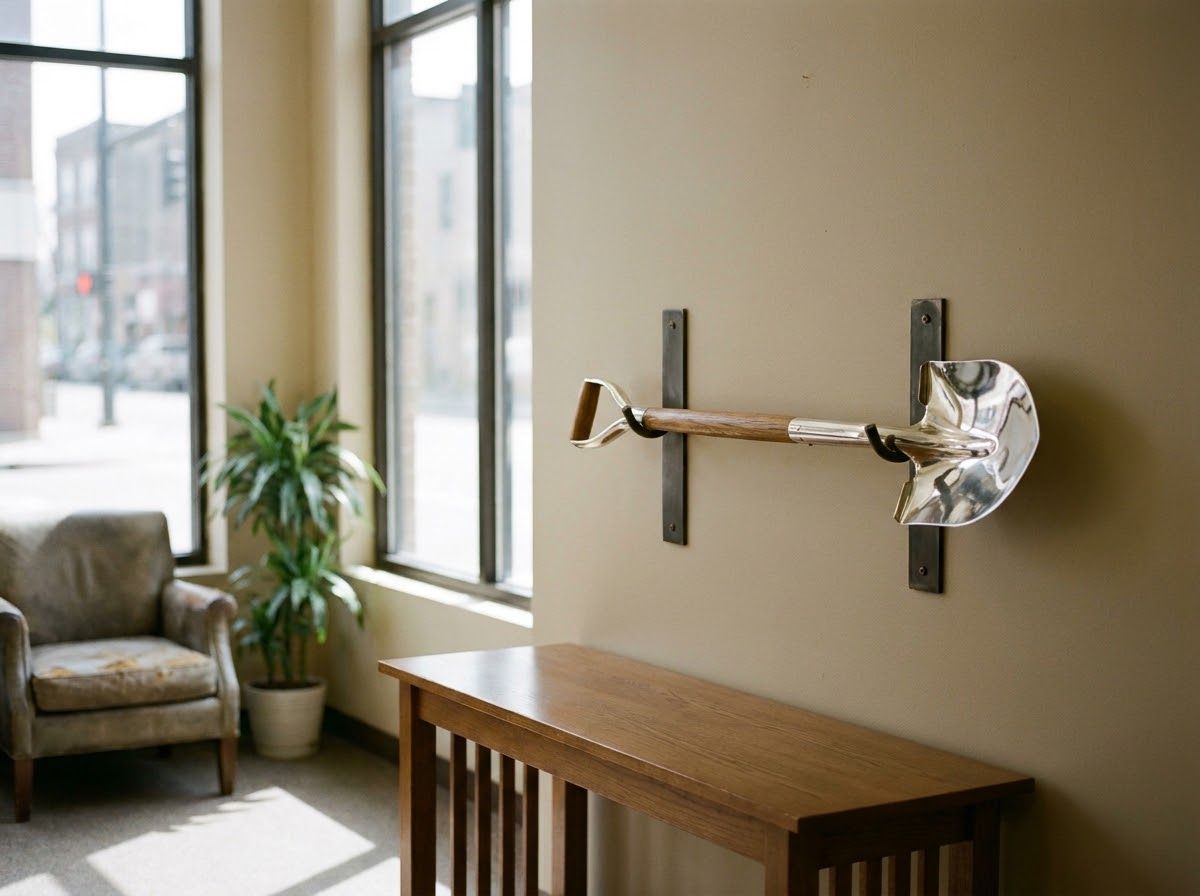
Part of the series: Groundbreaking Shovels: Types, Finishes and How They Are Used
After the photograph, the shovel needs a home. This page, part of our groundbreaking shovels guide, compares display options and explains how to protect the finish. We do not name hardware makers or quote loads; where weight matters, use the maker’s own sheet.
Finding-aid note: the sources cited here were consulted on 2026-11-17 and set beside the statements above.
Display options at a glance
| Option | Good for | Watch for |
|---|---|---|
| Closed case | Dust, handling and visitors’ fingers | Case materials, air circulation |
| Stand or easel | Lobby tables, desks | Stability, tip-over risk |
| Wall mount | Offices, halls | Weight, wall type, fixings |
A shovel is long and awkward; the choice usually comes down to where visitors walk and how much floor or wall you have. The oversize keys in our ceremonial keys guide face similar choices. If several people will hold shovels, how many shovels and who holds them also decides how many you may need to display.
Mounting weight and wall type
Weigh the shovel and compare it with the hanger’s stated capacity from the hanger maker. Identify the wall: solid masonry, stud-framed drywall or a thin panel behind, and choose fixings for that surface using the fixing maker’s technical sheet. Do not rely on drywall alone for something heavy. If you cannot find a stud or blocking, ask a facilities or installation professional.
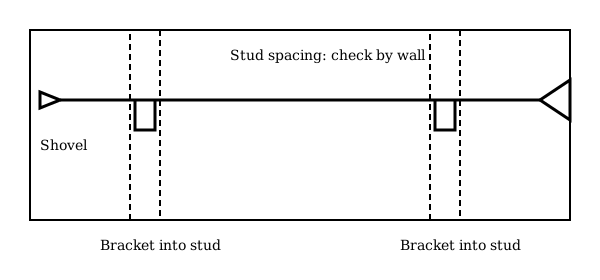
Practical steps:
- Lay the shovel on a table in the pose you want and photograph it for reference.
- Mark bracket positions with painter’s tape on the wall, check level with a spirit level, and keep ribbons and tassels clear of the metal.
- Fit the bracket, then test the fixing with a gentle pull before the shovel goes on.
- Pad contact points with soft padding so there is no metal-on-metal rubbing.
- Lift it into place with a helper; do not carry by a ribbon or plaque.
Protecting finishes from light, humidity and handling
- Humidity. Above 65% relative humidity, corrosion of clean metal surfaces speeds up significantly, per the Canadian Conservation Institute. Avoid damp basements and bathrooms.
- Fumes. Sulfur-containing gases tarnish silver and copper at very low levels, so avoid kitchens and areas near fresh paint.
- Touching. Visitors’ fingerprints leave salts and oils. A case or a high mount solves this. When you touch it yourself, use clean nitrile gloves.
- Direct sun. We did not find a figure for light in the sources we opened, but sun and heat near windows are sensible to avoid, and a shaded wall is the cautious choice.
Layout with photos and plaques
Pair the shovel with a framed event photograph and a plaque stating what the event was, the date and the names. Put the text at reading height and leave breathing room. If you have a certificate or a ceremonial key from the same project, group them in a tidy line instead of scattering them. For wording, see the engraving guide.
Cases: materials and airing out
Wood and wood-based products give off acids and other chemicals that can harm metal, so the Canadian Conservation Institute recommends sealed or pre-sealed wood, and notes that paints and varnishes are generally poor barriers. A new enclosed case should air out for at least four weeks before a metal object goes in. Latex paints are less harmful to metals than oil or alkyd paints. Ask the case maker what the case is made from and how it was finished.
Shipping and storage
Wrap each shovel in soft padding, keep it dry, and separate objects so they do not touch. Store flat or hung from a padded rail in a dry room. When shipping, use a rigid tube or box with padded ends and ask the carrier about insured delivery. Unpack with gloves, in a clear space, and inspect the finish. Our finishes guide covers care once it is on display.
A short checklist before you display
- Weigh the shovel and check the hanger or stand’s capacity from its maker.
- Check what the wall is made of and choose fixings for that surface.
- Check the case materials and let a new case air out.
- Choose a spot away from damp, direct sun and fumes.
- Pad all contact points.
- Add a label saying what the event was and when.
- Dust gently and rarely; do not polish unless the finish allows it.
Answers to common questions
How do you hang a ceremonial shovel?
Use a bracket or pair of hooks made for the shovel's weight, fixed to a stud or an anchor rated for it, and follow the hardware maker's instructions. Pad the contact points so metal does not rub against metal, and have two people lift it into place. Check the weight of your shovel before you buy hardware, because ratings are set by the maker.
Does a display case need to be sealed?
A sealed case helps limit dust and the movement of air, but the main concern is what the case is made of. Wood and wood products give off acids that can harm metal, so choose sealed or pre-sealed wood. Let a new case air out before you put a shovel inside, as conservation guidance advises.
Can a shovel be wall mounted?
Yes, if the wall and fixings can carry the weight. A stud, solid blocking or a correctly rated anchor is needed, and drywall alone is not a safe fixing for something heavy. Read the anchor's technical sheet and the bracket's instructions. If you are unsure, ask a facilities manager or a professional installer.
How do you stop tarnish?
Keep the shovel clean, dry and away from fumes, handle it only with clean gloves, and display it in a case made of sealed or non-acidic materials. Sulfur compounds in air tarnish copper alloys and silver, and lower humidity slows corrosion. If a coating is needed, ask a conservator or the maker, since lacquers and waxes change appearance.
How long should a new case air out?
Conservation guidance says an enclosed space such as a display case should air out for at least four weeks before metal objects go inside, and an open, ventilated room at least four days. This lets emissions from wood, paint and varnish disperse. Ask the case maker what it is made from and how it was finished.
Further reading
Related reading
- Groundbreaking Shovels: Types, Finishes and How They Are Used
What a ceremonial groundbreaking shovel is, the main types, finishes, handles, engraving, display and care, plus a vendor-neutral checklist of what to ask.
- Engraved Groundbreaking Shovels: Wording Ideas and Plaque Layout
What to engrave on a groundbreaking shovel: wording patterns with placeholder examples, plaque versus blade engraving, a proofing checklist and fixes.
- Gold, Chrome and Other Finishes on Ceremonial Shovels
What gold, chrome, brass and painted finishes on ceremonial shovels mean, how plating wears, how to care for them and which questions to ask any maker.
- Groundbreaking Ceremony Shovels: How Many, Which Style, Who Holds Them
How to choose ceremonial shovels for a groundbreaking: single, matched or multi-handle, how to count them, who holds them, handling and what happens next.